
How AI is Changing LinkedIn Outreach in 2027
Discover how AI is transforming LinkedIn outreach in 2026: from smarter prospecting and personalized messaging to adaptive campaigns and sales automation.

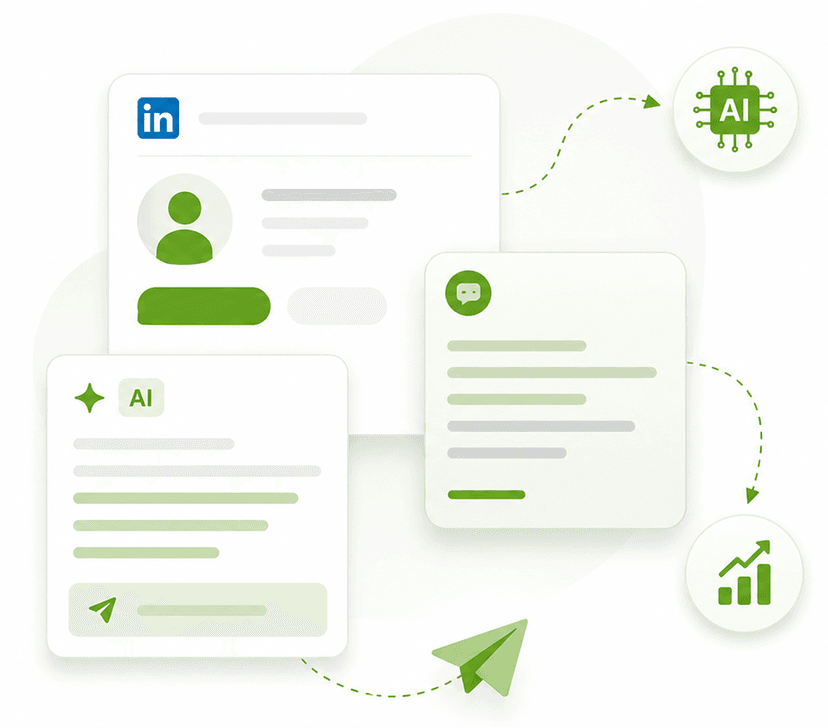
The landscape of LinkedIn prospecting has undergone a seismic shift. Gone are the days of rigid, template-driven sequence blasts that yield single-digit response rates. In 2026, buyers demand contextual relevance, instantaneous value, and human-like empathy; expectations that human sales reps alone cannot scale to meet across thousands of accounts.
Enter autonomous AI agents. Powered by real-time intent signals and deep neural language modeling, modern outbound pipelines now operate with surgical precision.
Teams utilizing AI-driven contextual sequencing see an average 3.4x increase in positive reply rates and a 65% reduction in time spent on manual research.
Smarter Prospecting With AI
Traditional lead generation relied on static filters like job titles and company headcount. Modern AI ingests multi-dimensional signals, including recent funding rounds, tech stack migrations, executive job changes, and public social sentiment.
Personalization at Scale
Generic outreach is instantly flagged and ignored by modern decision-makers. AI eliminates the false dichotomy between scale and personalization by generating unique hooks for every single recipient based on their digital footprint.
AI Outreach Writer vs. Traditional Template
“Hi {First Name}, I saw you work at {Company} and wanted to connect about our SaaS solution that helps companies like yours increase revenue.”
“Hi Marcus, loved your recent post on distributed tracing challenges at ScaleCloud. We solved a similar latency bottleneck in our proxy layer...”
Adaptive LinkedIn Campaigns
Campaigns no longer follow rigid linear paths. If a prospect engages with a shared resource or visits your company page mid-sequence, the AI instantly adapts the next touchpoint to match their updated buyer journey stage.
Adaptive Campaign Flow
AI-Powered Follow-ups
Timing and tone are everything in follow-up sequences. Autonomous agents analyze reply semantics to determine whether a prospect is genuinely busy, asking a technical objection, or ready for a booking link.
“Looks interesting, but we already have internal tools built for this and budget is locked until Q4.”
Smarter Lead Qualification
Filtering out unqualified leads before your team spends valuable minutes on discovery calls prevents pipeline bloat. AI qualification scores inbound interactions against your historical closed-won patterns instantly.
Budget, Authority, Need, and Timeline are continuously evaluated through natural language processing during live chat and message exchanges.
Campaign Intelligence
Stop guessing which subject lines or hooks work. Campaign Intelligence engines run continuous multi-variant tests across messaging variants, automatically shifting traffic to high-performing hooks within hours.
Requires manual sample sizing and batch evaluation periods before implementation.
Dynamic allocation shifts live campaigns every 50 impressions for maximum conversion.
Conversation Intelligence
Every reply is parsed for sentiment, buying signals, and competitor mentions. Sales managers get a bird's-eye view of team pipeline health without digging through individual message threads.
Prospect viewed compliance documentation twice on company website following last message.
Next Best Action
When a prospect goes dark or asks a complex technical question, sales reps receive instant AI recommendations on whether to send a case study, offer a sandbox environment, or step back.
Future of LinkedIn Outreach
As autonomous agents become standard practice across enterprise sales organizations, the winning differentiator will not be volume, but the authenticity and depth of contextual engagement.
“The future belongs to revenue teams who treat AI not as a replacement for human connection, but as an amplifier of genuine context and empathy.”
The Future is Intelligent Outreach, Not Just Automated Outreach
Transforming your sales motion from primitive automation to true AI-powered orchestration requires the right platform stack. By embedding intent signals, real-time personalization, and adaptive multi-channel sequences into your daily workflow, your team can achieve unprecedented pipeline growth without scaling headcount.